
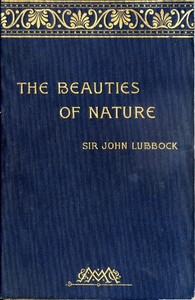
The Beauties of Nature, and the Wonders of the World We Live In by Sir John Lubbock
Published in the late 19th century, this book is a collection of essays that act as a friendly guide to the natural world. Sir John Lubbock, a banker, politician, and devoted scientist, writes with the excitement of someone sharing his favorite discoveries. He doesn't present a single linear plot, but rather a series of captivating explorations. One chapter might be about the sophisticated social life of bees, while the next explains how mountains are formed or why the sky is blue. He takes ordinary things—a grain of sand, a snail's shell, a shower of rain—and reveals the extraordinary processes behind them.
Why You Should Read It
What makes this book special is its tone. Lubbock isn't writing just for other scientists; he's writing for anyone with a spark of curiosity. His joy is contagious. When he describes the engineering of a spider's web or the long journey of a piece of flint, you feel his amazement. He connects the dots between geology, biology, and astronomy in a way that feels natural and exciting. Reading it feels less like studying and more like having the scales fall from your eyes. You start noticing details you used to walk right past. In our modern, fast-paced world, this book is a wonderful reminder to slow down and observe. It argues that understanding nature isn't just for experts—it's a source of daily joy and perspective for everyone.
Final Verdict
This is a perfect book for curious minds who feel daunted by formal science texts. It's for the gardener who wants to know more about their soil, the hiker curious about the rocks on the trail, or the parent looking for ways to share a sense of wonder with their kids. While some of the science has been updated since 1892, the core message—that the world is full of accessible marvels—is timeless. If you enjoy the works of modern writers like Robin Wall Kimmerer or Robert Macfarlane, you'll find a kindred spirit in Lubbock. Pick this up for a dose of gentle, insightful wonder that will change how you see your own backyard.
Edward Allen
6 months agoThe layout is very easy on the eyes.
Lucas Harris
1 year agoFive stars!
Betty Lopez
1 year agoThe layout is very easy on the eyes.
Liam Torres
10 months agoIf you enjoy this genre, the character development leaves a lasting impact. One of the best books I've read this year.





Margaret Rodriguez
11 months agoSurprisingly enough, the clarity of the writing makes this accessible. Definitely a 5-star read.