
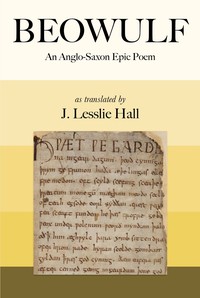
Beowulf: An Anglo-Saxon Epic Poem by J. Lesslie Hall
Let's set the scene: Denmark, a very long time ago. King Hrothgar built a magnificent mead hall called Heorot, a place for his warriors to feast and celebrate. But their joy attracts a terrible neighbor: Grendel, a monstrous, hate-filled creature who can't stand the sound of happiness. For twelve years, he stalks the hall at night, snatching and devouring Hrothgar's men. The kingdom is paralyzed by fear.
The Story
Hearing of this plight, a hero from across the sea, Beowulf of the Geats, arrives with his band of warriors. He boasts he will fight Grendel without weapons, mano-a-monster. That very night, in a savage and bloody battle, Beowulf fulfills his promise, tearing Grendel's arm from its socket. But the victory is short-lived. Grendel's mother, seeking vengeance, attacks the hall. Beowulf must follow her into a terrifying, underwater lair for a second, even darker fight. Finally, the story leaps ahead fifty years. Beowulf is now an old king, facing his greatest challenge: a furious dragon awakened by a stolen cup. This final battle asks what happens when a hero's strength meets the inevitability of time.
Why You Should Read It
What stunned me is how modern it feels. Yes, the language is ancient and formal, but the core is pure, gripping drama. It's not about intricate politics; it's about primal fears in the dark and the code that makes a person stand against them. Beowulf isn't brooding or conflicted in a modern way—he's confident, almost shockingly so. His boasts are his resume. Reading it, you feel the immense pressure he's under to live up to his own word. The poem asks tough questions: What is a legacy? What do we owe to our people? Is there glory in a death that secures your community's safety?
Final Verdict
This isn't just for literature students. If you love epic fantasy, Marvel movies, or stories about the raw fundamentals of good vs. evil, you owe it to yourself to meet the original. The J. Lesslie Hall translation is a solid, readable version that keeps the muscular rhythm of the Old English. It's perfect for anyone who wants a direct line to the ancient roots of storytelling, full of monsters, heroics, and a surprising amount of heart. Just be ready for some seriously intense, no-holds-barred action sequences—they invented the trope.
Lisa White
8 months agoHigh quality edition, very readable.
Ava Walker
11 months agoFinally found time to read this!


Susan Miller
8 months agoUsed this for my thesis, incredibly useful.